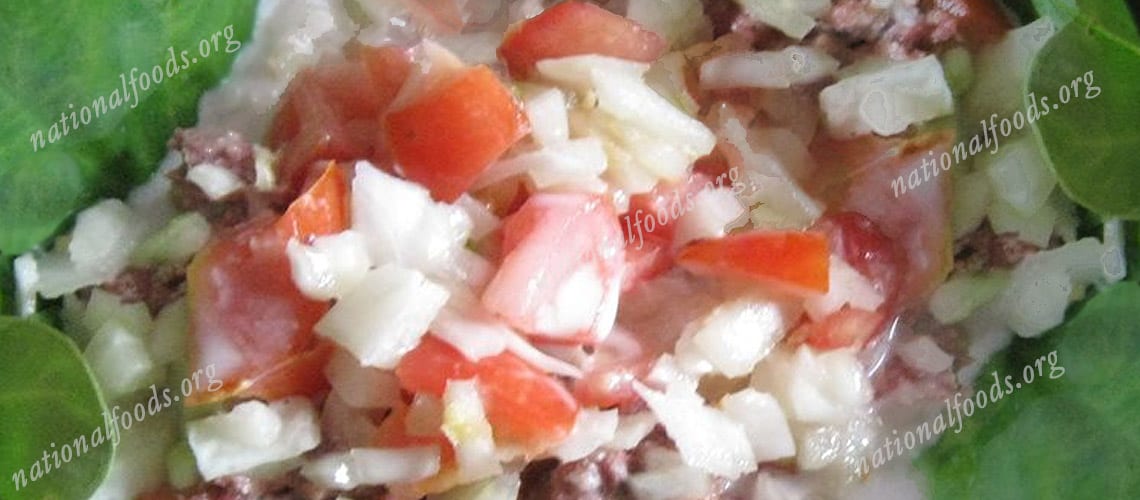
Palusami is the national dish of Kiribati and is widely enjoyed across many Pacific Island cultures. The dish is deeply connected to the natural environment of the islands, where coconuts and taro grow abundantly and form the backbone of everyday nutrition.
Traditionally, Palusami is made by wrapping coconut cream and onions inside layers of taro leaves, then enclosing the bundle in banana or breadfruit leaves. These parcels are slow-cooked in an underground earthen oven, allowing the taro leaves to soften and absorb the rich coconut flavors while neutralizing their natural bitterness.
Palusami developed as a practical and communal dish, requiring few ingredients but careful preparation. Because it relies entirely on local crops, it reflects island self-sufficiency and sustainable food practices. Variations exist across the Pacific, with some versions including meat or seafood, but the coconut-and-taro combination remains central.
In Kiribati, Palusami is commonly prepared for gatherings, celebrations, and shared meals. It represents hospitality, tradition, and a strong connection to land and sea, making it an enduring symbol of the country’s culinary identity.