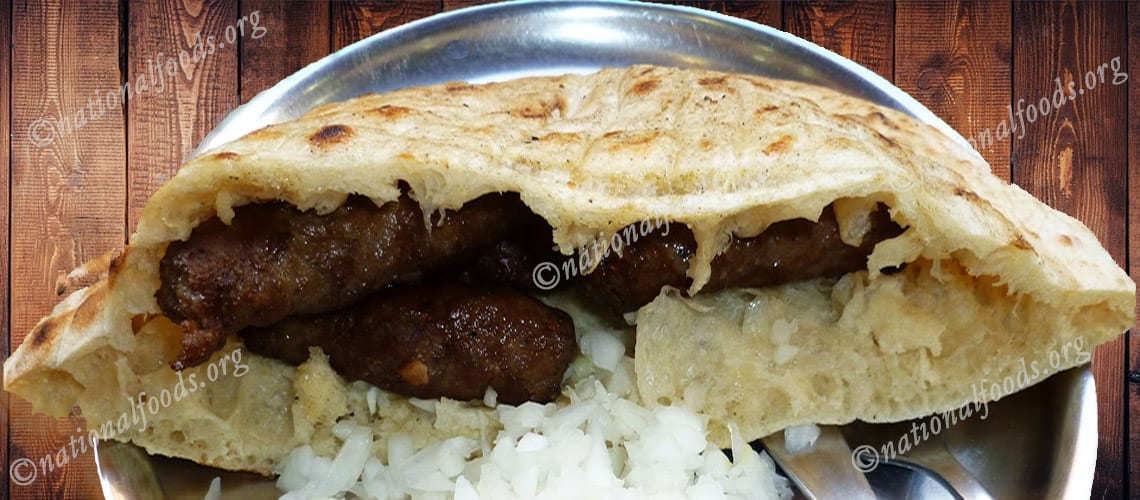
Ćevapi (also spelled ćevapčići) are small, skinless grilled sausages that originated in the Balkan Peninsula during the Ottoman period. While they are popular throughout the region, including Serbia, Croatia, and Slovenia, ćevapi are most strongly associated with Bosnia and Herzegovina, where they are widely regarded as the national dish.
The dish evolved from Ottoman kebab traditions, adapted over centuries to local tastes and available ingredients. In Bosnia and Herzegovina, ćevapi are traditionally made from minced beef (sometimes mixed with lamb), shaped into small logs, and grilled over high heat without casings. Their simplicity highlights technique rather than heavy seasoning, relying on quality meat, proper texture, and careful grilling.
Ćevapi are classically served inside flatbread such as somun or similar breads, accompanied by finely chopped raw onions and a fresh cold salad like Šopska salata. This combination balances the richness of the grilled meat with freshness and acidity. Today, ćevapi are a cornerstone of Bosnian food culture, enjoyed as street food, family meals, and celebratory fare, symbolizing the region’s shared history and culinary identity.