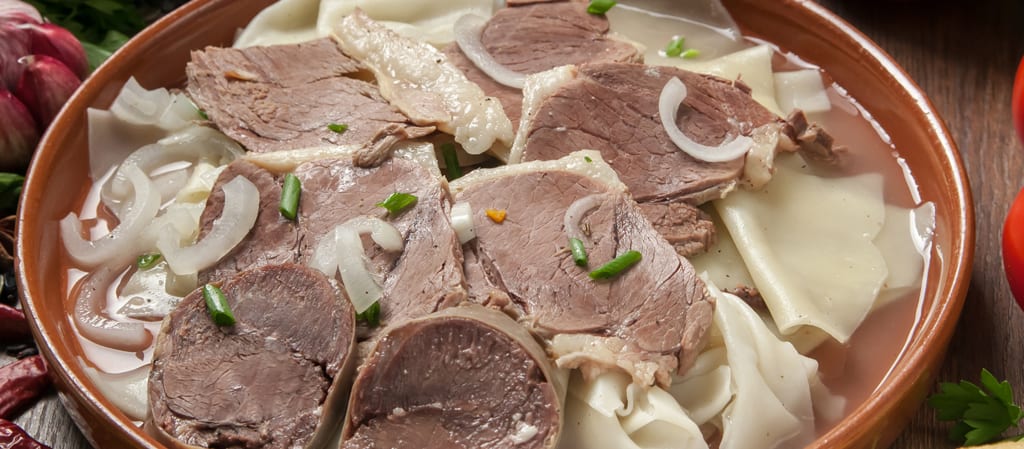
National Dish of Kazakhstan Beshbarmak

Beshbarmak is boiled meat with noodles. Traditionally, horse or sheep meat was used. The dish was first prepared by Kazakh nomads. The name of the dish translates to ‘five fingers’ which refers to the fact that no cutlery is used to partake in Beshbarmak and the meal is therefore eaten with the hand.

Servings

4 Person

Prep Time

30 Min

Cook Time

190 Min

Total Time

240 Min

2 ½ lbs.
lamb / beef (with bones)
1
large onion (peeled and cut into rings)
1
bay leaf
2
eggs (whisked)
4 cups / 600g
plain flour (sifted)
¾ - 1 cup
water
½ tbsp.
salt
Ground pepper
Finely sliced chives (garnish)

Beshbarmak is boiled meat with noodles. Traditionally, horse or sheep meat was used. The dish was first prepared by Kazakh nomads. The name of the dish translates to ‘five fingers’ which refers to the fact that no cutlery is used to partake in Beshbarmak and the meal is therefore eaten with the hand.

Directions for Preparing Beshbarmak

  1. Place the meat in a deep pot with water and half of the onion rings.
  2. Bring to a boil, continuously removing the scum from the surface.
  3. Reduce the heat, cover the pot and allow it to simmer for two hours and thirty minutes (2:30) or until the meat is soft and easily falls off the bone.
  4. Prepare the noodles by combining the whisked eggs with the flour in a large bowl.
  5. Add the salt and gradually pour in the water to form a dough.
  6. Knead the dough well, then roll it into a ball and cover with plastic wrap.
  7. Allow the dough to sit for about twenty-five (0:25) minutes.
  8. Divide the dough into several small balls.
  9. Roll each ball into a thin layer, then trim it into 10×10 cm noodle squares.
  10. Set them aside separate from each other to avoid sticking.
  11. Five minutes before the meat is done, add the remaining onion rings together with salt and pepper.
  12. Use a slotted spoon to remove the meat, bones, and onions.
  13. Separate the soft meat, chop it into bite-sized pieces and discard the bones.
  14. Bring the stock to a boil and let it boil for about seven (0:07) minutes, then add the noodles and allow it to cook for about eight (0:08) minutes.
  15. Arrange the noodles around the serving platter.
  16. Lay the meat in the center of the platter.
  17. Pour a little of the broth/stock over the meat.
  18. Garnish with finely sliced chives and serve.

National Dish of Bahamas


Beshbarmak is the national dish of Kazakhstan and one of the most important foods in Central Asian nomadic culture. The name beshbarmak translates to “five fingers,” referring to the traditional practice of eating the dish by hand rather than with cutlery. The dish originated among Kazakh nomads, whose lifestyle depended heavily on livestock such as horses and sheep. Boiling meat was both practical and efficient for mobile communities, preserving nutrients while producing a rich broth. Homemade noodles were added to make the meal more filling and suitable for sharing among large groups. Beshbarmak was historically reserved for significant events such as weddings, funerals, and honored guests. The communal serving style, with meat placed at the center of a platter and noodles arranged around it, reflects deep cultural values of hospitality, respect, and unity. Even today, Beshbarmak remains a symbol of Kazakh identity. Although modern versions may use beef, the traditional preparation with horse or sheep meat continues to hold strong ceremonial importance, preserving centuries-old culinary customs.


Related Recipe

21 Views
August 14, 2025
Lachcha Paratha is a popular Indian flatbread known for its crispy, flaky layers. Traditionally made with a mix of whole wheat flour and oil, this delicious paratha pairs perfectly with curries, yogurt, or even on its own with some butter.
519 Views
June 21, 2025
Shah Plov is a rich and aromatic Azerbaijani rice dish made with saffron rice, tender meat, dried fruits, and nuts, baked inside a crisp golden crust for a stunning presentation.
17 Views
December 17, 2023
Gado Gado is a well-known dish in Indonesia. It is a one-dish meal, similar to a salad. It is prepared with fresh seasonal vegetables, eggs, tofu, and ingredients native to Indonesia

User Area